Forest People’s Programme is a human rights organisation that works alongside more than 60 partner organisations. Set up in 1990, their mission is to secure the rights of indigenous peoples and forest communities across the world. Their work spans legal advocacy, policy reform as well as direct support for communities on the front line of deforestation, land theft and injustice. Having worked with organisations such as FERN and Proforest, we were very excited to work with them.

The Challenge
When we crawled the existing FPP website, we found over 20,000 links. This was excluding any external links, paginated or filtered links. It’s not unreasonable for a website for a well established NGO to reach this. But the problems begin when over time the structure that these links sit within stops making sense. What starts as a logical website structure fights against the reality of a complex organisation. The answer here isn’t to stop adding content, it’s to make structural changes along the way, which takes time and is an issue we see with even the most well intentioned and organised NGOs .
For FPP, this meant that the architecture had become overly-complex, content was heavily PDF based and the navigation was no longer fit for purpose. When this happens, both the user and the organisation suffer – the user is frustrated by not being able to find content and the organisation isn’t able to surface content well enough for discovery.
The front end was also looking tired, again something that can happen when time isn’t spent on incremental updates. Onboarding new team members onto the CMS was difficult. DDoS attacks had added a further layer of friction that required a front-of-site security check each time a user visited the website.
More insights on this topic: What makes a great nonprofit website

Discovery insights
During our discovery workshops we identified four distinct audience groups; indigenous people’s organisations, policy makers, journalists and institutional donors. Each of these groups could arrive at the website at different routes and with entirely different needs.
One of the most interesting tensions was fundamental to the project: as an organisation that empowers communities, how much should FPP talk about themselves, versus giving a voice to the stories from the communities they serve?
We confirmed that from a positioning perspective FPP sat firmly in the serious, established and informative territory but with a genuine aspiration to feel more modern and accessible.
These insights shaped decisions throughout the project. The tension between FPP’s institutional voice and the communities they represent, for example directly influenced the website architecture, from how content was categorised, what to surface, and whose stories to add. And the positioning and audience work gave a clear brief for where the design needed to take brand.
NGO workshop guide: Designing effective workshops for Nonprofit Organisations

Designing on solid foundations
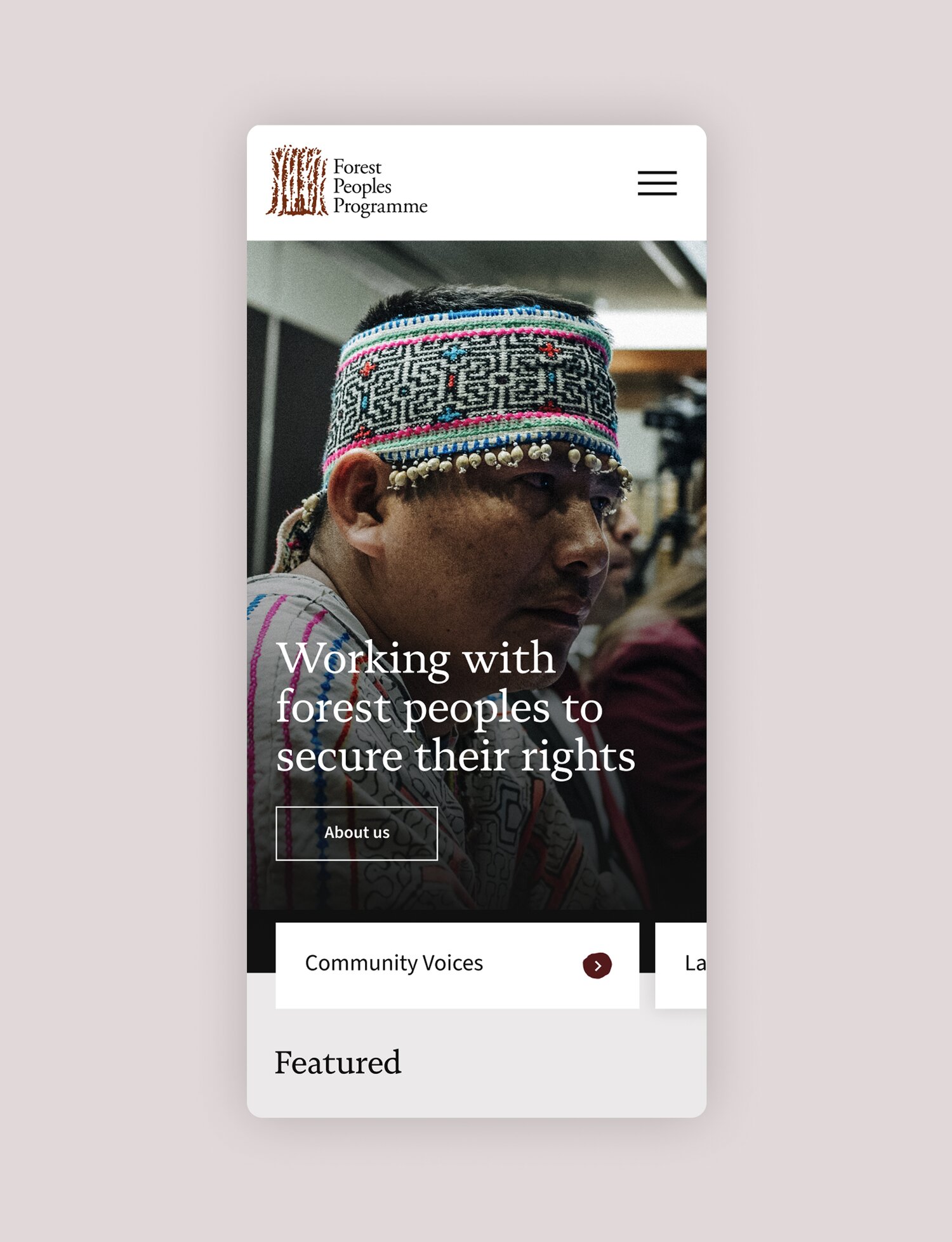
For the design phase we explored a range of directions to test how much the brand identity should change and how that might look in practice. Through this exploration it was decided that the existing brand should remain, as the logo, colours and typography had built up recognition over time, and that familiarity was worth preserving. So, rather than a complete overhaul we needed to concentrate on freshening up the design using brand assets that would remain familiar.
We introduced a serif and sans-serif font pairing, which combined a more traditional and modern character. This was in keeping with the original typography yet easier to license. We kept the FPP maroon but used a brighter teal accent and subtle details like torn edges to push towards a more organic and human feel, as well as expanding the palette to create contrasting blocks. The outcome was a modernised design that didn’t depart from what FPP had built up over the years.
Technical solution
We built the website using TYPO3 as the content management, with Cloudflare resolving the DDoS vulnerability to remove the need for the previous workaround. Using Cloudflare also means that we can serve assets from nearer the requests, which means that the website loads more quickly for users in areas with low-bandwidths.
Although TYPO3 is natively multilingual, additional work was needed to surface content in languages such as Swahili which aren’t part of the main language switcher.
We also switched to a green hosting provider, better aligning with FPPs values while allowing for the package to scale as the website grows.
The site is multilingual, supporting English, French and Spanish. Migrating approximately 2,000 existing content items was a significant undertaking, and the most challenging part of the project.
Building a sustainable future: How web development teams can create sustainable digital ecosystems
It's definitely a day to celebrate! I wanted to take a moment to express my sincere gratitude for the incredible work you've done on the FPP website project. The site looks absolutely fantastic, and we couldn’t be happier with the final result.
I know it’s been a long journey to get to this launch, and I truly appreciate your dedication, patience, and persistence in seeing it through, especially the migration. Your expertise, responsiveness, and willingness to accommodate our many requests have been invaluable, and we’re so grateful to have had you as our developers in this project.
Thank you again for everything and we look forward to continuing the work together!
The outcome
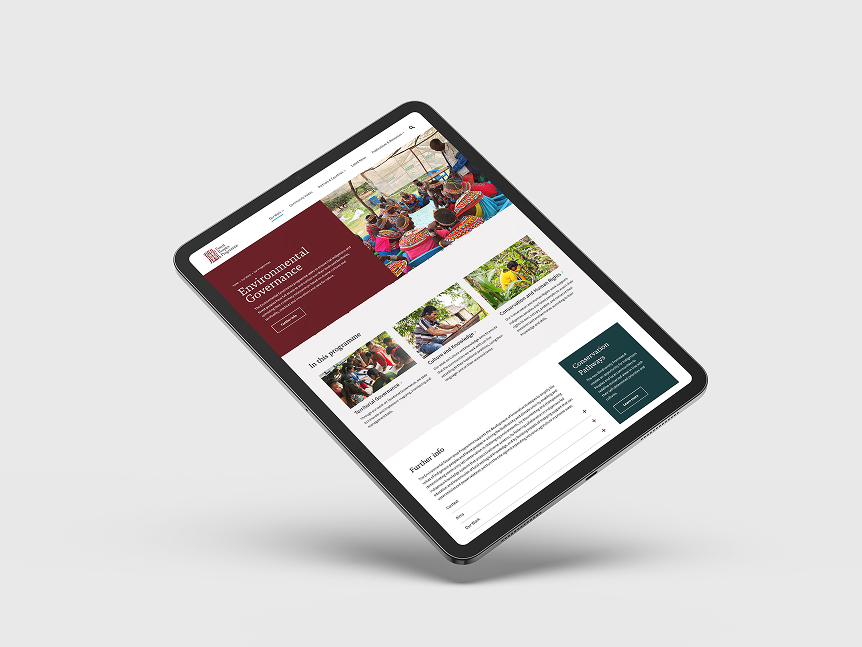
The new site gives FPP a solid platform that’s now fit for purpose and can grow as more content is added. Content that was previously hard to find is now well-structured and discoverable. The team can easily manage this in the content management system, including being able to curate what content they want the user to see. All of this can be achieved without needing technical support for routine tasks.
The move to TYPO3 has made it straightforward to onboard new team members, and the green hosting with Cloudflare setup means that the website is faster, more secure and better aligned with FPP’s values.
Perhaps more importantly, the site now reflects what FPP actually does and who they are – putting the voices and stories of the forest peoples front and centre.